Stretching for Padel: 10-Minute Mobility Routine
Updated August 30, 2026
Use dynamic mobility before you play and slower static stretches after the match. This stretching for padel routine focuses on the ankles, hips, upper back, shoulders and forearms needed for low defensive positions, quick turns and overhead shots.
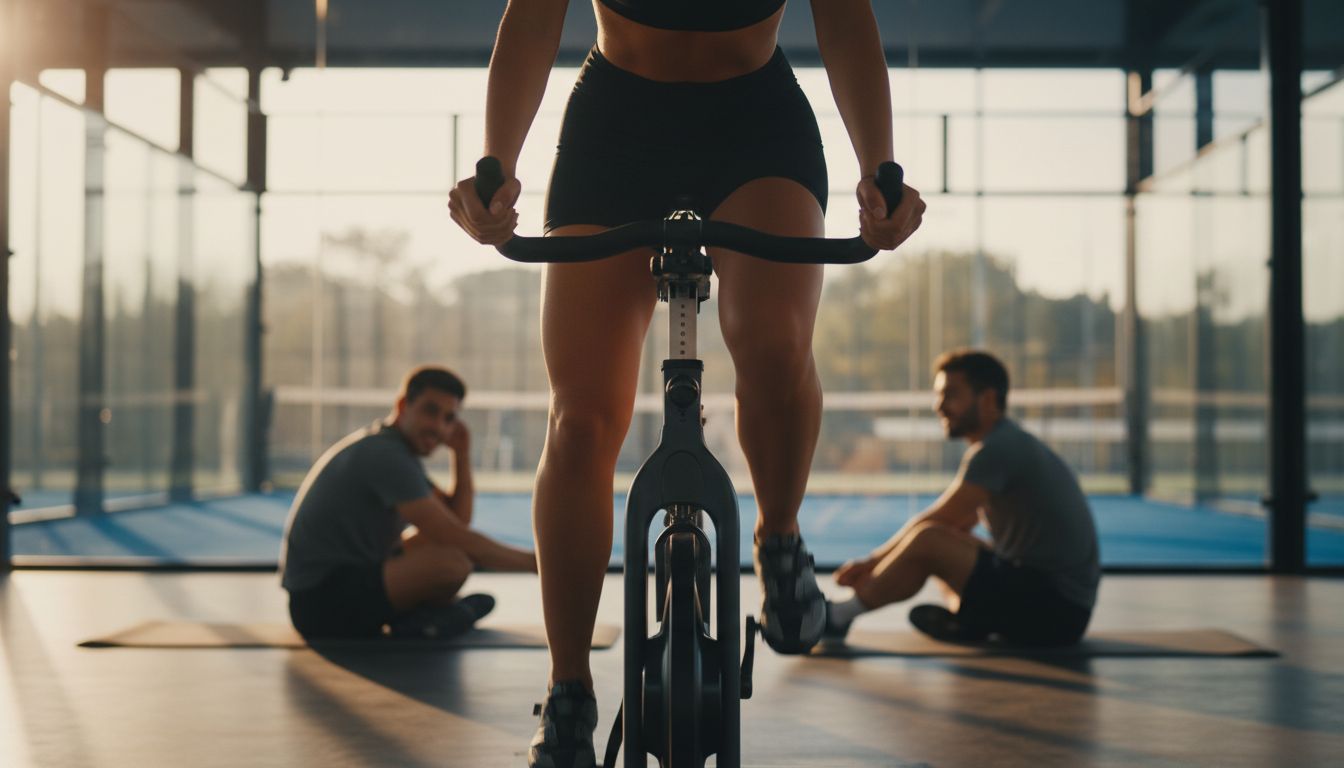
Stretching for Padel: Before vs. After a Match
Mobility means actively controlling a joint through its available range. Examples include ankle rockers, hip switches and thoracic rotations. It fits naturally into a warm-up because the muscles stay active.
Static stretching means moving into a position and holding it. It can improve flexibility over time, but long static holds should not be the only preparation before explosive activity. Reviews of warm-up research generally favour light aerobic work, dynamic movement and sport-specific actions before sprinting, jumping or rapid changes of direction.
5-Minute Padel Mobility Routine Before a Match
Start with two or three minutes of brisk walking, side steps or easy jogging. Then perform the following movements without forcing your range.
1. Ankle Rockers — 8 reps per side
Stand in a split stance and drive the front knee forward over the toes while keeping the heel down. Smooth ankle movement helps you get lower for volleys and defensive shots without the heel lifting early.
2. Hip Openers — 6 reps per side
Lift one knee, rotate it gently outward and step down under control. Reverse the movement on the next repetition. Keep your trunk tall instead of chasing a large circle.
3. Walking Lunge with Rotation — 5 reps per side
Step into a comfortable lunge and rotate the upper body toward the front leg. This combines hip movement with the trunk rotation used during forehands, backhands and overhead preparation.
4. Thoracic Rotations — 6 reps per side
Use a split stance or shallow squat, place your hands together and rotate through the upper back. Keep the hips relatively stable and follow your moving hand with your eyes.
5. Arm Circles and Shadow Swings — 20–30 seconds
Progress from small to larger arm circles, then rehearse easy forehands, backhands and bandejas without a ball. Finish with several split steps and short lateral movements before starting full-speed rallies.
This mobility sequence prepares movement but does not replace the complete padel warm-up routine. Add progressive hitting before competitive points.
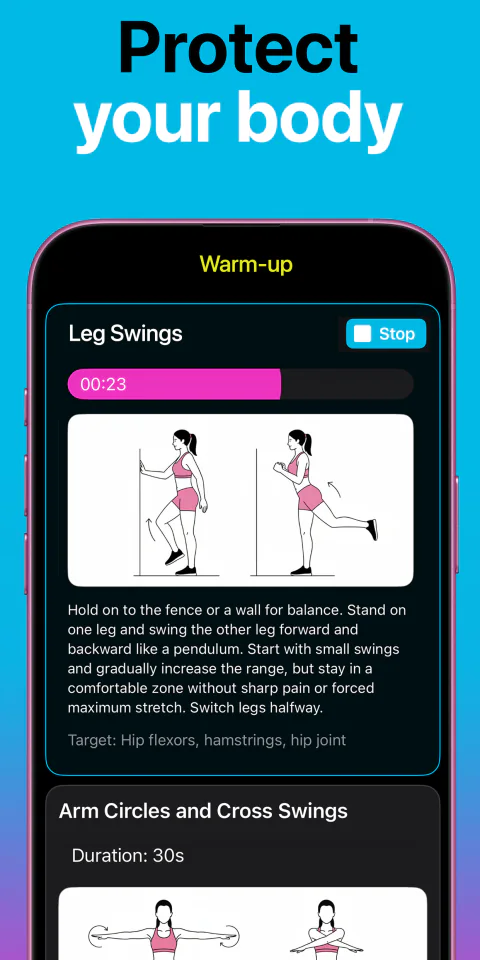
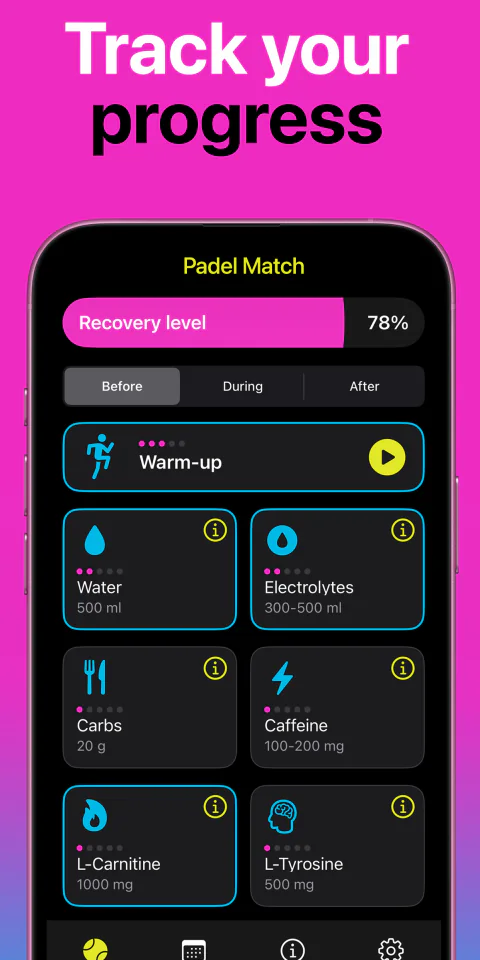
Your 5-Minute Padel Warm-Up, Guided Step by Step
Follow the exercise order, visual instructions and timer before your next match.
- Made specifically for padel
- Timed exercise guidance
- Warm-up and cooldown routines
Free on the App Store · iPhone
10-Minute Padel Stretching Routine After a Match
Walk for a few minutes and let your breathing settle first. Hold each stretch at gentle-to-moderate tension for about 20–30 seconds. Complete one or two rounds without bouncing.
1. Calf Wall Stretch
Place both hands on a wall, step one foot back and keep the rear heel down. Use a straight back knee for the upper calf, then bend it slightly to shift the emphasis lower.
2. Hip-Flexor Stretch
Use a half-kneeling or split stance. Gently tuck the pelvis and move forward until you feel the front of the rear hip. Avoid arching the lower back.
3. Hamstring Stretch
Place one heel slightly ahead, soften the supporting knee and hinge forward from the hips with a long spine. Stop before the stretch becomes sharp or pulls behind the knee.
4. Glute Figure-Four
Sit on a bench or lie on your back, cross one ankle over the opposite thigh and gently draw the legs closer. This targets the hips used repeatedly in low defensive positions.
5. Forearm Flexor and Extensor Stretch
Extend one arm with the elbow straight. Gently guide the fingers down with the palm facing away, then repeat with the palm facing toward you. Use very light pressure around a sensitive wrist or elbow.
6. Chest and Shoulder Stretch
Place the forearm against a wall or fence and turn the body away slightly. Keep the shoulder down and stop if the position pinches at the front or top of the joint.
When Padel Stretches Are Not the Answer
Stretching should feel like controlled tension, not treatment for an injury. Stop and seek appropriate medical advice if you have:
- sharp, sudden or worsening pain;
- visible swelling, bruising or joint instability;
- numbness, tingling or loss of strength;
- pain that changes how you walk, lunge or swing;
- symptoms that persist or repeatedly return after matches.
Mobility can help you use the range you already have, but recurring pain may also require load management, strength work, technique changes or clinical assessment. See the guide to common padel injuries for warning signs and prevention basics.
How Often Should Padel Players Work on Mobility?
A short routine performed consistently is easier to sustain than an occasional long session. Try five minutes before each match and one or two separate 10-minute mobility sessions during the week. Choose the joints that feel restricted, while keeping every movement pain-free.
Stretching and mobility are only parts of preparation. Strength, gradual increases in playing volume, suitable footwear, sleep and recovery all affect how your body handles repeated matches.
Padel Stretching FAQ
What is a good stretching routine for padel?
Before playing, combine ankle rockers, hip openers, upper-back rotations, arm circles, shadow swings and short lateral steps. After playing, cool down and use comfortable stretches for the calves, hips, hamstrings, forearms, chest and shoulders.
Should you stretch before or after padel?
Do active mobility and dynamic movement before the match so the muscles stay engaged. Longer static holds fit better after the match or during a separate flexibility session.
Is there a padel stretching app?
Yes. The Padel Recovery app includes guided warm-up, mobility and post-match routines, so you can follow a repeatable sequence instead of building a new routine before every match.
Take the Routine to the Court
Use Padel Recovery to follow the warm-up without building the sequence yourself.
Download NowFree on the App Store · iPhone
Disclaimer: This guide is general educational information, not individual medical advice. Modify or stop any movement that causes pain and consult a qualified professional for persistent symptoms.
Sources
- A Review of the Acute Effects of Static and Dynamic Stretching on Performance
- Foam Rolling and Stretching on Physical Performance: Systematic Review and Meta-Analysis
- Match Analysis, Physical Training, Injury Risk and Rehabilitation in Padel
- Incidence, Prevalence and Nature of Injuries in Padel